Carbon Studio
Johan van Hasseltkade 205B
1031LP Amsterdam
https://www.instagram.com/carbonstudio.eu/
mail@carbon-studio.eu +31 6 22692976 ImprintCarbon Studio
Johan van Hasseltkade 205B
1031LP Amsterdam
https://www.instagram.com/carbonstudio.eu/
mail@carbon-studio.eu +31 6 22692976 ImprintCARBON STUDIO TRIGGERS AUTONOMY
Carbon Studio is an Amsterdam-based strategic spatial design agency, operating from the premise that space should not prescribe behaviour, but enable it. We design freedom.
Triggering autonomy means listening closely to who you are and uncovering what is essential—then carefully translating your identity into powerful spatial experiences that are deeply physical, tactile, and human.
In a world increasingly absorbed by screens, materiality is an essential counterbalance. For us, materiality is not decoration, but a carrier of identity, structure, and intent. Through research and engineering—paired with originality and culturally informed design thinking—we craft environments that enable genuine human interaction and deliver expressive tactile experiences.
Founded in 2017, Carbon Studio is led by Pieter Kool, whose work ranges from large-scale international retail, workplace, and hospitality programmes to bespoke, detail-driven projects. Pieter worked at G-Star RAW from 2004 to 2017, where he later served as Global Creative Director 3D Design & Development and led the design of over 1,000 stores and shop-in-shops worldwide, as well as more than 40,000 m² of office environments and numerous trade-fair pavilions. Pieter also works as a consultant for brands and regularly delivers keynotes on spatial identity, materiality, retail, and workspace design.
Clients
Ace&Tate
Ace Agency
Bugaboo
Barts
Birkenstock
BMW
Bugaboo
Coef Men
Columbia
G-Star RAW
Le Smash Burgers
Nike
OMA - Office for Metropolitan Architecture
Secrid
Scotch & Soda
The Butcher
The Entourage Group
Timboektoe
Toni Loco Pizza
Van Moof
Vitra
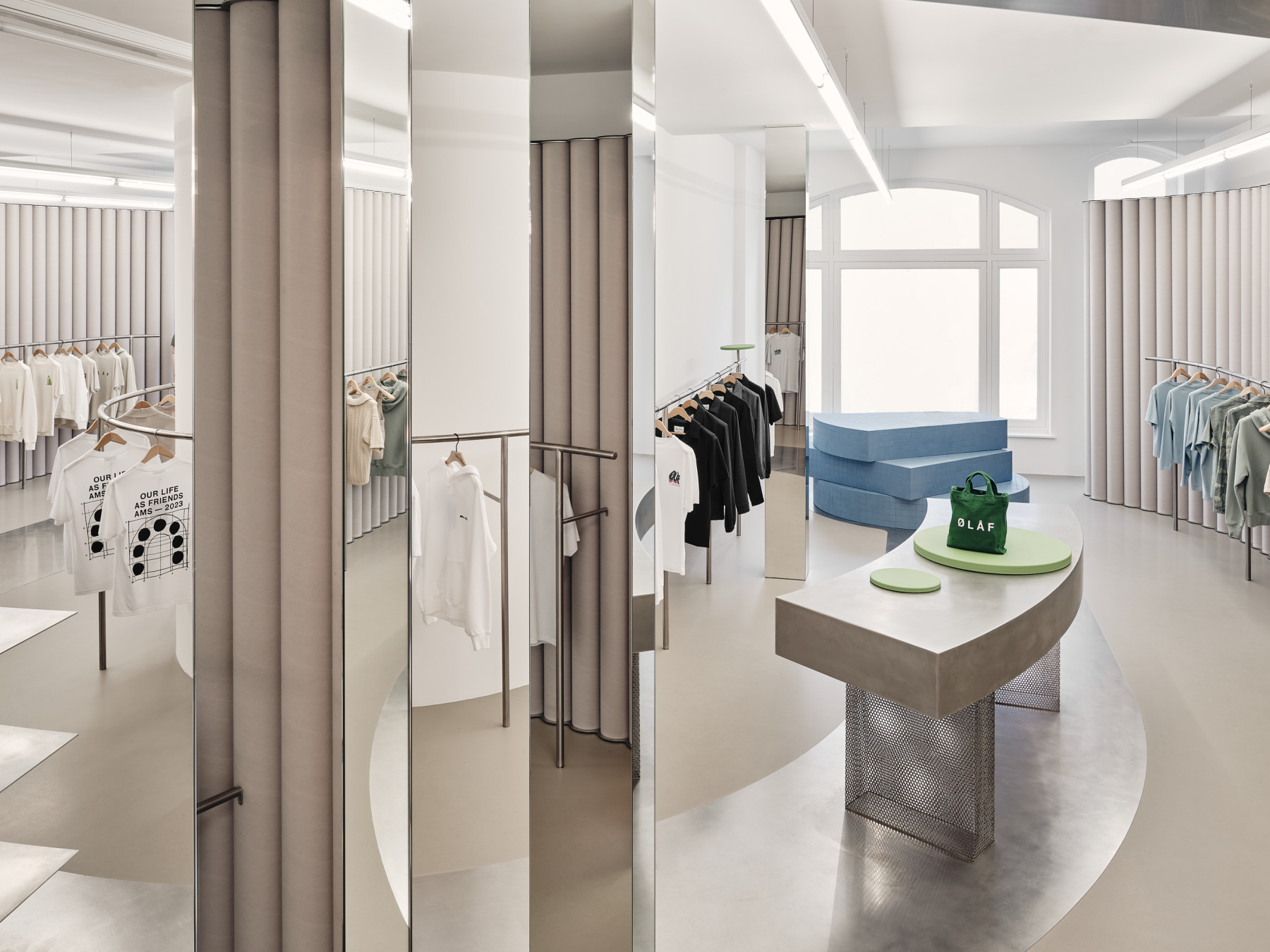


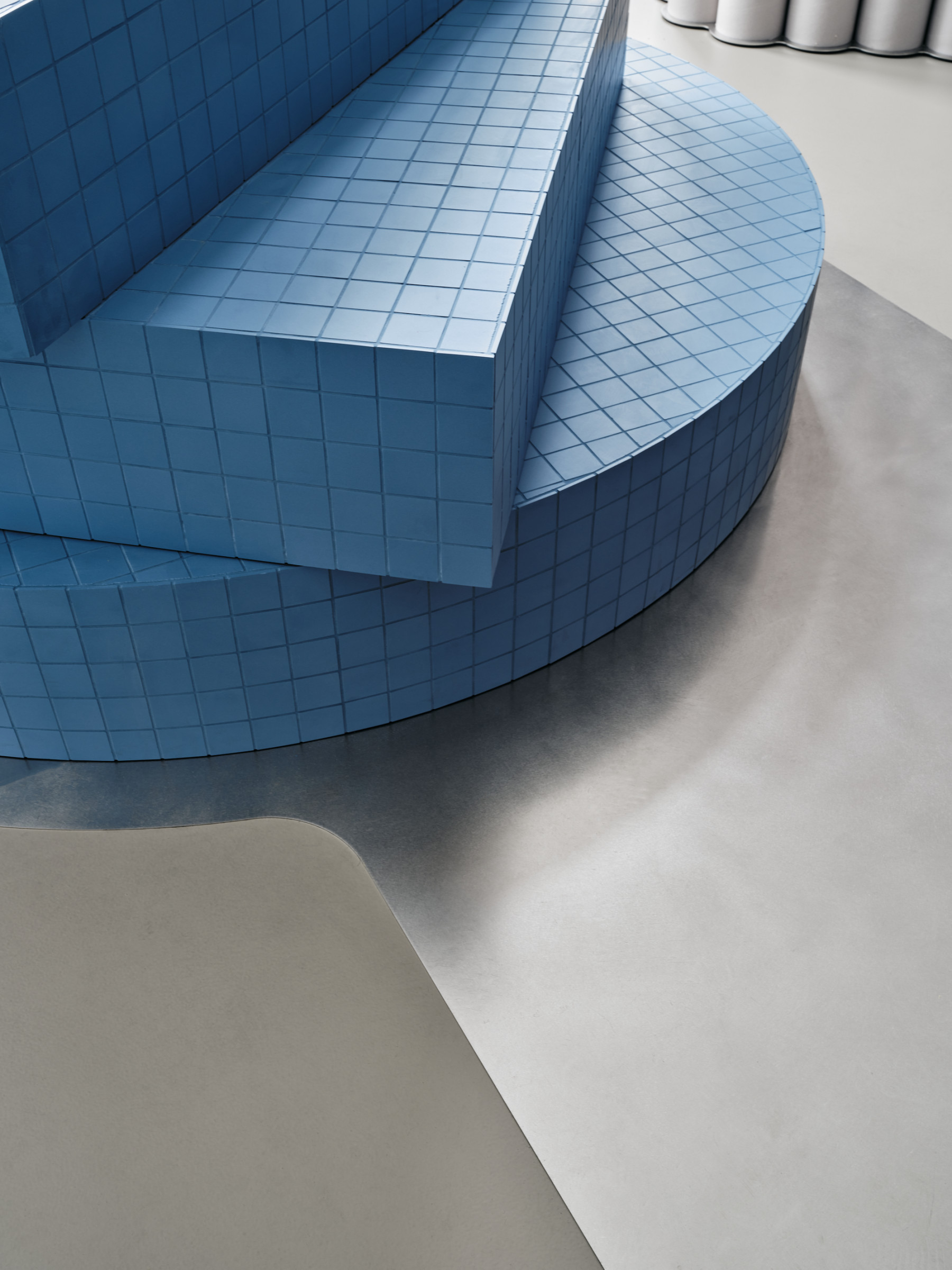
The Olaf Hussein team comprises a group of urban, diverse and friendly people: passionate about streetwear, but valuing genuine connections over bland coolness. The brands latest monobrand concept location is celebration of relationships, both human and environmental, captured in a modular, friendly minimalist aesthetic.
The store is located in two adjacent ground floor spaces of separate historic buildings that have been connected through a small passage. Over time, many alterations have resulted in an odd eight columns scattered throughout the 150m2 space.
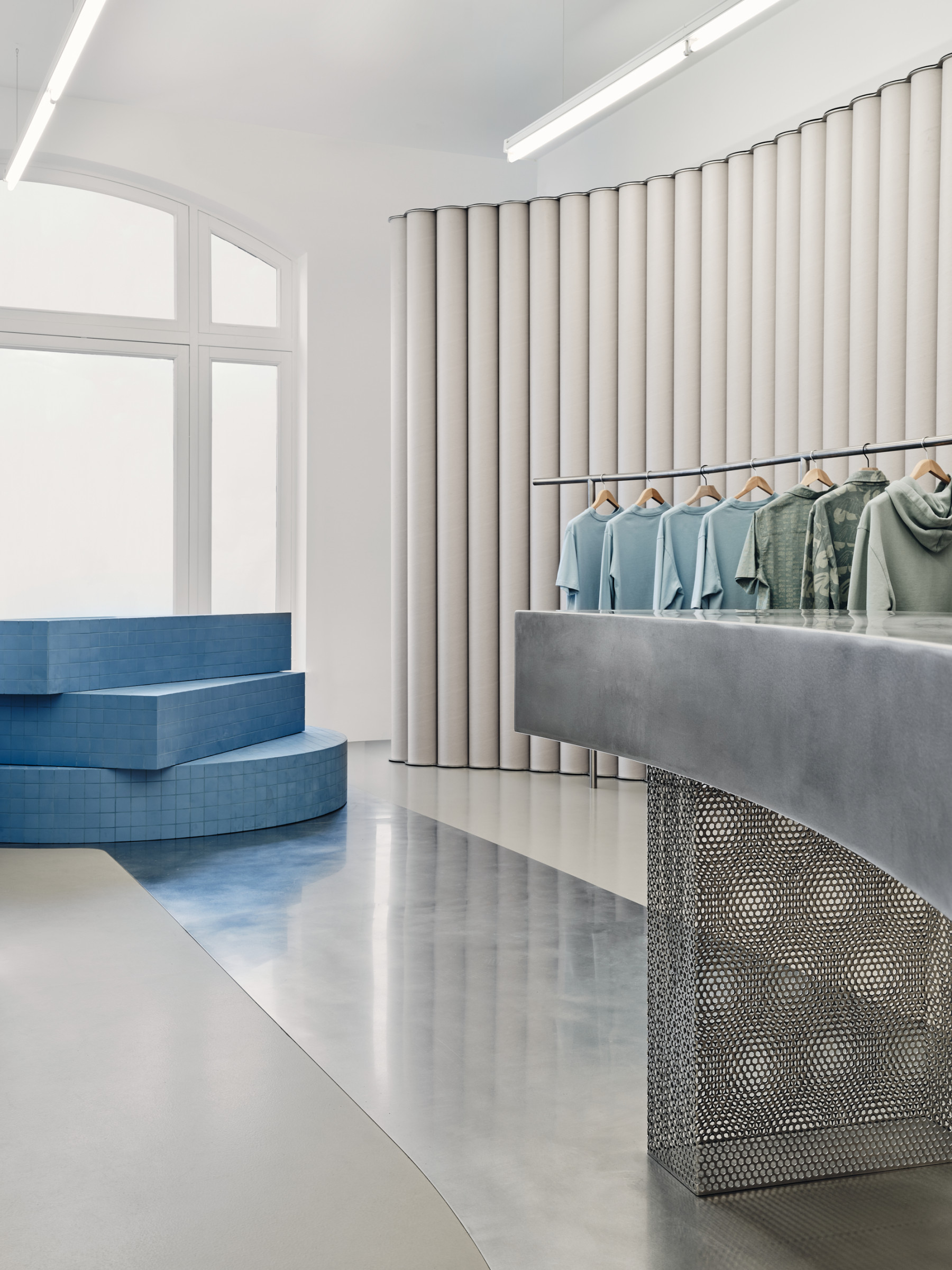
The spatial concept embodies a gallery-like experience featuring a continuous horseshoe wall connecting the two spaces. We placed clothing on the inside and outside of the horseshoe and in three places the wall is punctured by two displays or vitrines, and the third puncture connects the horseshoe with the courtyard so natural light comes in from the back. The courtyard is another really nice feature of this space because it helped create a very logical area for fitting rooms – accessible yet private and there’s beautiful light coming in from the courtyard. The blue showpiece at the end of the store is both a window display and a store-facing display and seating element. Each item in the space has been made with a curve to match the radius of the horseshoe. The u-turn shaped trajectory cleverly navigates visitors past the mirror-clad columns.
The floor has a brown tone and the cardboard main wall is grey, in order to create a neutral background for the clothing. The economic, flexible and sustainable qualities of the cardboard tubes, combined with the tactile appeal of their round and soft textures, fit well with the ‘friendly minimalist’ ethos that defines the brand.
The sustainability strategy for the interior is twofold. Firstly, cardboard is always sourced locally and easily recycled into new cardboard. Consequently, the environmental impact of cardboard is extremely low and it’s truly circular. Secondly, the other fixtures were produced in untreated, low-grade stainless steel. Although the environmental impact during production is high, it’s easy to recycle – not downcycle - and we avoided coatings, paint or other finishes that could contribute to hazardous waste.
photography: Maarten Willemstein